Types of places
University Makerspaces: How the Public Gets In
Updated July 7, 2026
Over the last decade universities built maker facilities that embarrass most private shops — waterjets, full wood and metal shops, entire floors of 3D printers. Most are student-only. But 'most' isn't 'all,' and the exceptions are some of the best access deals in the country.
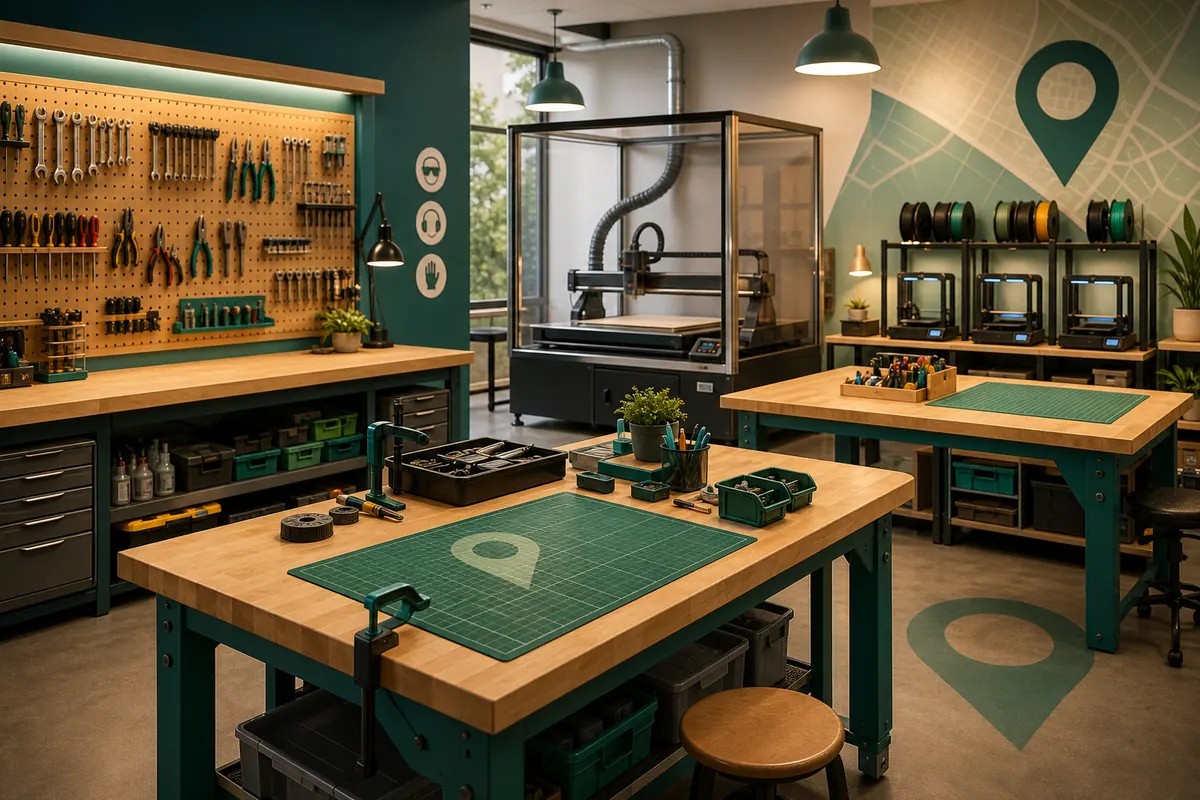
The access tiers, from locked to open
- Students and staff only — the default at most engineering-school makerspaces. If you're not affiliated, this tier is closed; don't take it personally, it's insurance.
- Alumni access — a growing number of universities extend makerspace access to alumni, sometimes through the alumni association, sometimes as a paid membership. If you graduated from a school with a makerspace built after you left, one email is worth sending.
- Community memberships — some university innovation centers and fab labs sell public memberships outright, especially facilities built partly with economic-development money. These are the jackpot: industrial equipment at makerspace prices.
- Continuing education classes — extension and continuing-studies courses often include facility access for the duration. The same enroll-for-access move that works at community colleges works at universities, just at higher prices.
- Public events and open houses — maker faires, workshops, and youth programs run in these facilities all year. Not standing access, but a legitimate way to see the equipment and meet the staff who know what community options exist.
How to find the open ones
Search the university's name plus “makerspace community membership,” “fab lab public access,” and “innovation center membership.” Check three campus corners that behave differently: the engineering school (best equipment, most locked), the art department (shops and studios, sometimes open via extension classes), and the library — university libraries increasingly run maker labs, and some are open to anyone who walks in, because that's how libraries think. If a campus is a Fab Lab Network member, its charter usually requires some public access — often a free open lab day each week. That one detail unlocks more university equipment than anything else on this page.
What to expect if you get in
| University makerspace | Private makerspace | |
|---|---|---|
| Equipment | Often industrial-grade, well-maintained | Prosumer, variable |
| Cost (where public access exists) | Often modest — subsidized | $50–$250/mo |
| Hours | Academic calendar; breaks can close everything | Evenings, weekends, sometimes 24/7 |
| Culture | Students on deadlines, staff supervision | Hobbyists and pros, member-driven |
| Training | Structured certifications, well-run | Varies by shop |
The academic-calendar catch is real: winter break, finals weeks, and summers can shrink hours or close facilities entirely. Ask for the full-year hours picture, not the semester one — the standard pre-membership questions apply here with that one addition.
If every campus door is closed
You still learned something valuable: where the equipment is. University shops staff usually know every other access point in town — the community makerspace, the college program, the guild. Ask. Then work the normal finding process with that local intelligence in hand.
Frequently asked questions
Can non-students use university makerspaces?
Sometimes. Look for community memberships at innovation centers and fab labs, alumni access programs, continuing-education classes that include facility use, and university library maker labs — which are the most likely to be open to the public.
Do alumni get makerspace access?
At a growing number of schools, yes — free, through alumni association membership, or as a paid tier. Many facilities were built after older alumni graduated, so few people think to ask. Email the makerspace directly; staff answer this question weekly.
What is a Fab Lab and why does it matter for access?
Fab Labs are fabrication facilities affiliated with the global Fab Lab Network, whose charter expects some free public access — commonly an open lab day. If a university or college near you runs one, that's often the public door into otherwise closed equipment.
Are university makerspaces better than private ones?
The equipment often is — waterjets and industrial machines are common. But hours follow the academic calendar, culture is student-centered, and access is the hard part. For most non-students, a private shop's predictability wins for regular work.