Decision guide
Use a Shared 3D Printer or Buy Your Own?
Updated July 7, 2026
For lasers and CNC, 'use the makerspace' is usually the right answer. 3D printing is the exception: reliable printers got so cheap that ownership is often correct surprisingly early. Here's the honest version of when to buy, when to stay shared, and the four cases where the makerspace keeps winning forever.
Quick verdict
Haven't printed anything yet? Use a library lab — free, zero commitment. Printing monthly and parts fit a lunchbox? Buy; entry machines cost less than a quarter of membership. Need resin, large format, or exotic materials? That's what shared access is still for.
Why the math flipped for printers
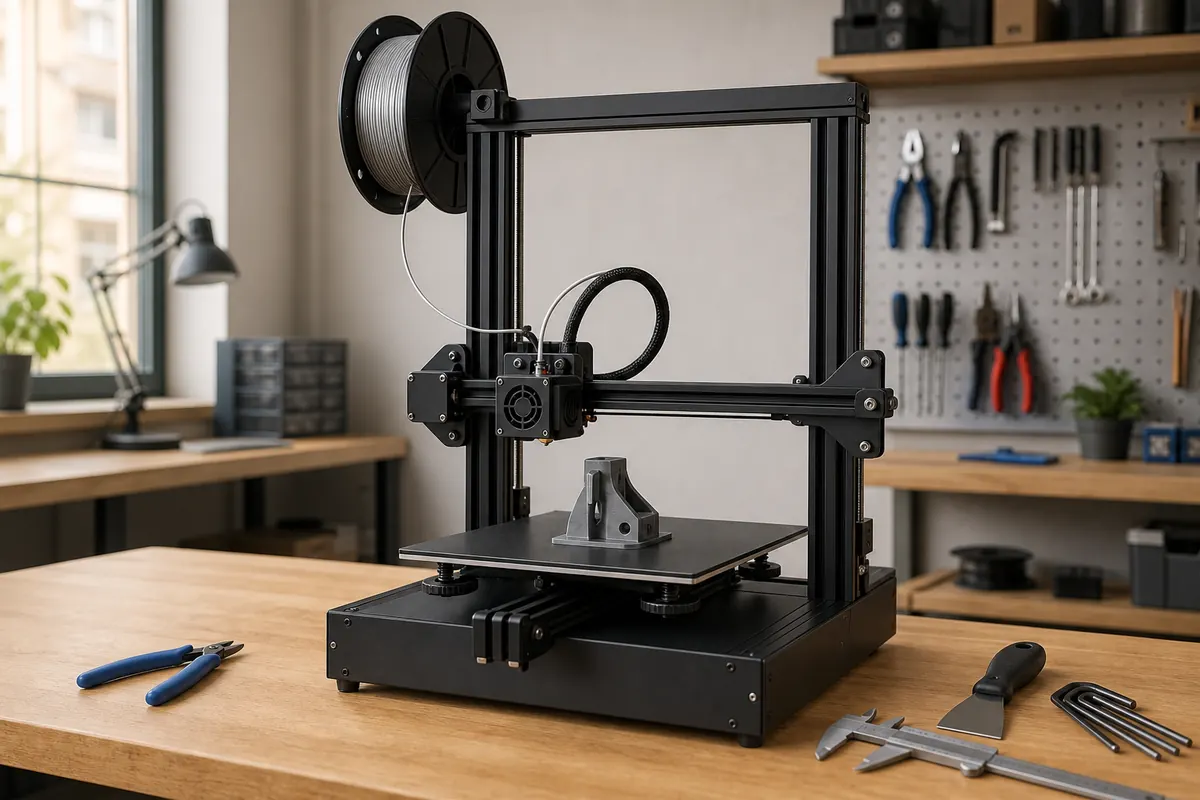
A decade ago a reliable printer cost $2,000 and tinkering was mandatory. Today current entry machines run $200–$400, print well out of the box, and fit on a desk — no ventilation drama (with PLA), no dust collection, noise like a quiet appliance. Compare that to $50–$250/month membership: the machine pays for itself in two to four months of dues. No other maker tool crosses over that fast — a laser needs exhaust engineering and a CNC needs a garage, but a printer just needs an outlet.
The ownership decision by printing volume
| Your volume | Right answer | Why |
|---|---|---|
| Once, to test an idea | Library lab | Free beats everything at n=1 |
| A few parts a year | Library or print service | Ownership means maintaining an idle machine |
| Monthly or more, small parts | Buy | The crossover case — dues exceed the machine fast |
| Iterating designs weekly | Buy, no question | Same-day reprints are the whole workflow |
| Resin, nylon, carbon fiber, big parts | Makerspace / service | See below |
The four cases where shared access still wins
- Resin printing. Fine-detail SLA involves toxic liquid resin, IPA washing, and UV curing — a ventilation and mess commitment most homes shouldn't make. Makerspace resin stations exist precisely so you don't have to. Try it there before ever considering one at home.
- Large format. Parts bigger than a ~250mm cube need machines whose price and footprint keep them shared.
- Engineering materials. ABS, nylon, and carbon-filled filaments want enclosures, hardened nozzles, and real ventilation — shop territory until you're specialized.
- Learning and diagnosis. The member who looks at your warped print and says “bed temp, and slow your first layer” compresses months of forum reading into ten seconds. Even printer owners keep shop access for this alone.
If you buy: the honest shopping list
Budget the machine plus about $100: a few spools of decent PLA, a spare nozzle set, and a dry box (wet filament is the silent cause of half of all bad prints). Skip the accessory rabbit hole beyond that until a real need appears. For current machine comparisons, The Maker Guide's 3D printing section tracks the field so you don't have to read forty reviews. And keep the library card active — your printer will be mid-job the day you urgently need a second one.
Frequently asked questions
What does a good beginner 3D printer cost now?
$200–$400 buys a genuinely reliable entry machine — auto bed leveling, sane defaults, prints well the first week. The $600–$1,200 tier adds speed, enclosures, and multi-color. Below $150, you're buying a hobby of fixing a printer, which is a different hobby.
Is 3D printing at home safe? What about fumes?
PLA in a ventilated room is broadly considered fine for home use. ABS and resin are a different story — real ventilation requirements, which is exactly why those belong at a makerspace until you have a dedicated, vented space.
Won't a cheap printer just frustrate me?
The frustration era mostly ended — current entry machines from major brands print reliably out of the box. The remaining failure sources are wet filament and ambitious first projects. A dry box and modest expectations cover both.
Should I still join a makerspace if I own a printer?
Many owners keep a cheap tier or library access for the shared-only stuff: resin, big parts, and troubleshooting help. If printing is your entire making activity, a full membership rarely pays once you own a machine — run the first-year math.