Types of places
Repair Cafés and Fixit Clinics
Updated July 7, 2026
A repair café is the opposite of a repair shop: you don't drop the item off, you sit down with it, and a volunteer fixer coaches you through repairing it yourself — free. It's the friendliest door into the entire maker world, and most people have never heard of it.
How a repair café actually works
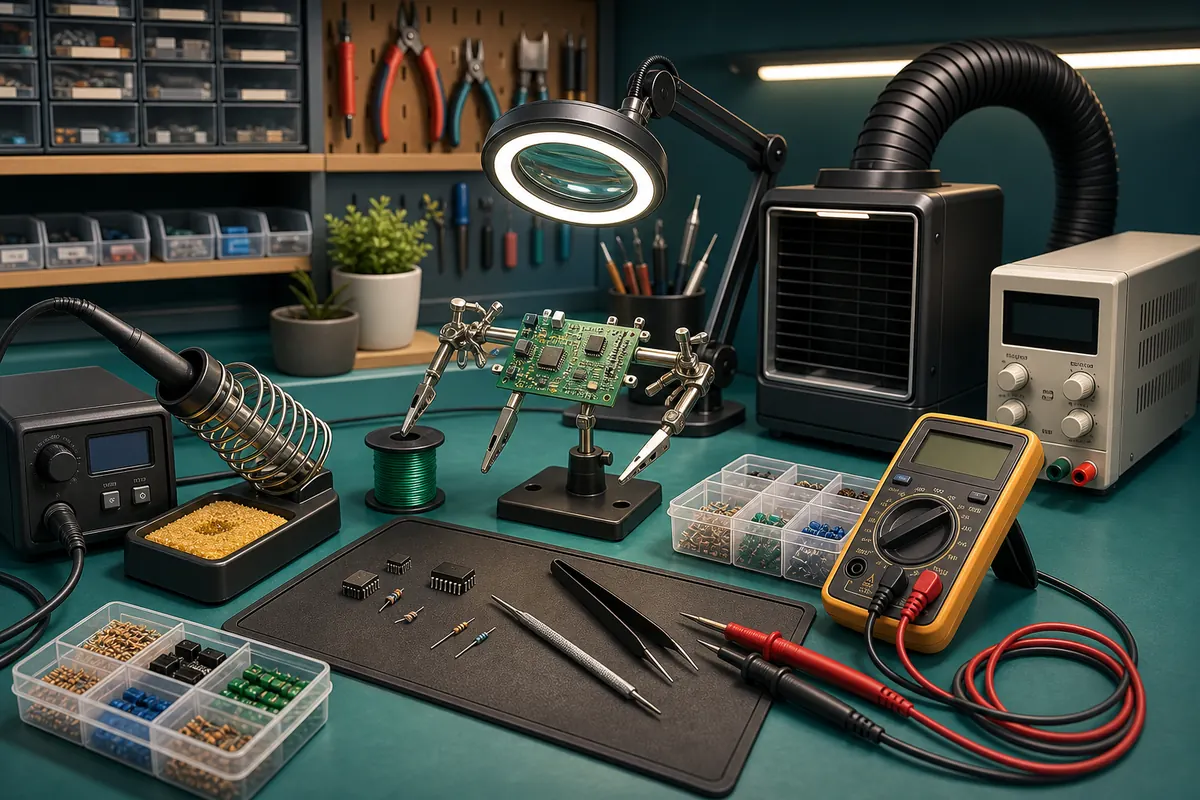
They're events, not places — typically monthly, hosted in libraries, community centers, churches, and makerspaces. You bring a broken thing: a lamp, a toaster, a jacket with a dead zipper, a wobbly chair, headphones, a bike. You check in, wait your turn, and then sit with a volunteer fixer at their station while the two of you diagnose and repair it together. The you-participate part is the point — repair cafés exist to transfer skills and confidence, not just to fix toasters. Sessions run 20–45 minutes per item, success rates are genuinely high (most broken household things are one bad cord, switch, or seam away from working), and the whole thing costs nothing, though donation jars are universal and worth feeding.
What fixes well — and what to leave home
| Bring it | Skip it |
|---|---|
| Lamps, fans, toasters, kettles | Microwaves (capacitors hold lethal charge) |
| Clothing, zippers, torn seams | Anything under warranty (repair voids it) |
| Headphones, small electronics, remotes | Large appliances (bring photos and questions instead) |
| Wooden furniture, wobbly chairs, toys | Items needing parts nobody stocks — order the part first, come back |
| Bikes, garden tools needing sharpening | Anything gas-powered, usually |
Pro move: look up your item's common failure mode beforehand and bring the likely replacement part (a lamp socket, a zipper slider kit, the exact belt). Fixers have generic supplies — wire, solder, thread, glue — but not your specific part, and “part on hand” turns a diagnosis visit into a completed repair.
Where they fit in the access landscape
Think of repair cafés as the zero-commitment end of a spectrum that runs through tool libraries (borrow tools, work alone) to makerspace electronics benches (your membership, your project, deep equipment). The café teaches you the diagnosis-and-disassembly skills; the day you want to fix things on your own schedule is the day the other two options start making sense. Plenty of makerspace members trace their origin story to one soldered headphone jack at a folding table.
Finding one — and the volunteering secret
Search “repair café” or “fixit clinic” plus your city, and check the international Repair Café foundation's directory, your library system's event calendar, and local environmental organizations (many run repair events as waste-reduction programs). If none exists nearby, the foundation publishes a starter kit for launching one. And here's the underused angle: repair cafés chronically need volunteer fixers, and “I can sew on a button” or “I can use a multimeter” qualifies. Volunteering is free admission to sitting next to fixers far better than you, monthly, indefinitely — the cheapest mentorship in all of making.
Frequently asked questions
Are repair cafés really free?
Yes — they're volunteer-run community events, usually backed by libraries, environmental nonprofits, or makerspaces. Donations are welcomed and replacement parts are on you, but nobody hands you a bill. Expect a waiver acknowledging repairs are best-effort.
What if my item can't be fixed?
It happens — sealed units, unavailable parts, and cracked boards defeat everyone. You'll still leave knowing exactly what's wrong, whether it's worth professional repair, and how to dispose of it responsibly. Diagnosis alone is worth the visit.
Do I have to do the repair myself?
You participate — that's the model. Fixers guide your hands rather than replace them, scaled to your comfort: some visitors solder their own joints, others mostly hold the flashlight and learn. Either way you leave knowing more than you arrived with.
How do I become a repair café volunteer?
Show up and ask, or contact the organizer — every café is recruiting, always. Useful skills include basic electronics, sewing, woodworking, bike mechanics, or simply patience and good hosting. Many cafés pair new fixers with veterans, so you learn while you help.