Tool access
Where to Find Woodshop Access
Updated June 11, 2026
A table saw, jointer, planer, and dust collection cost more than most cars and eat a two-car garage. Shared woodshops exist because almost nobody should buy all that for a bookshelf. Here's where to find one and how to judge it.
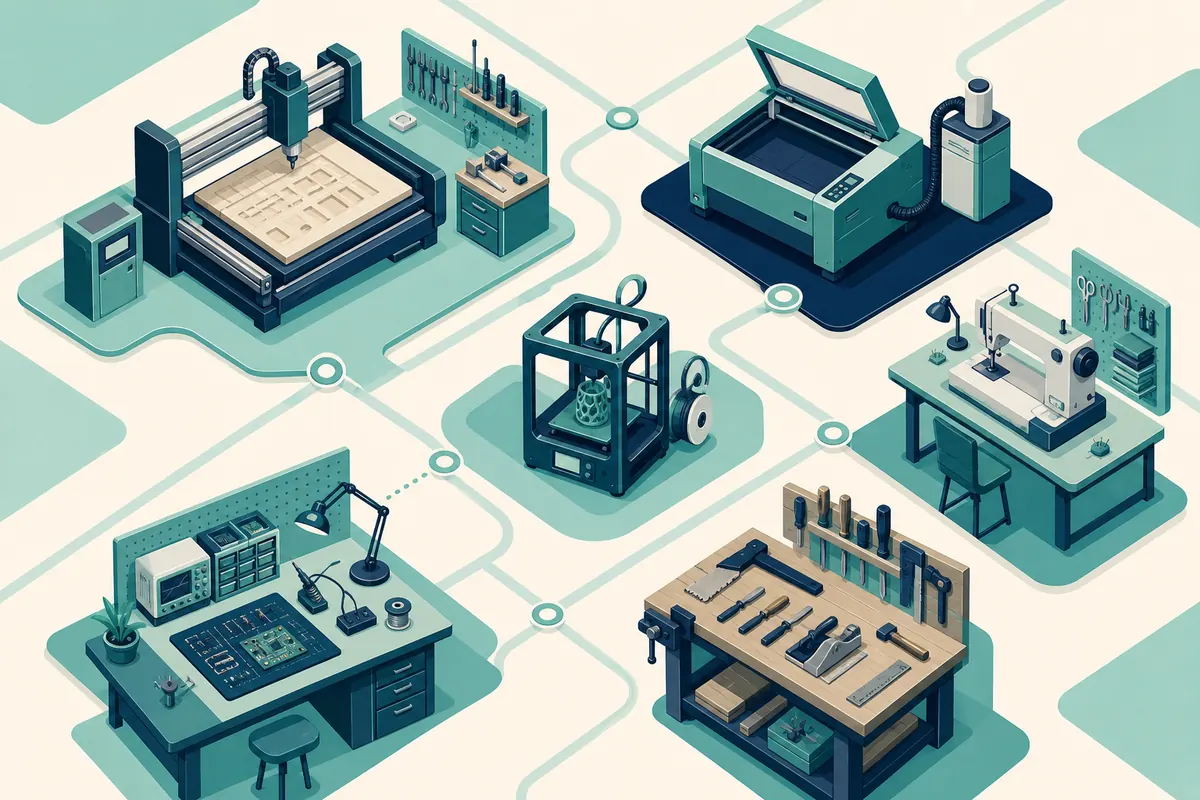
The usual suspects
- Community woodshops and makerspaces — membership shops with the full machine room: table saw, bandsaw, jointer, planer, router table, sanders, and benches. Most require a safety orientation plus per-machine checkouts.
- Community college woodworking programs — a semester of cabinetmaking or furniture-making costs less than two months of many memberships, includes instruction, and the shops are often better equipped than private ones.
- Woodworking schools and guilds — fine-woodworking schools sell class series and sometimes open shop time; local guilds (woodturners especially) run shop nights with mentors. Woodworking retailers also run surprisingly good in-store classes and demos.
- Tool libraries — for portable power tools to use at home; see tool libraries vs makerspaces. You won't borrow a table saw, but a track saw and router cover more than people expect.
Safety culture is the whole ballgame
Woodshops are where shared-shop safety gets real — the table saw is the most injury-producing tool in any makerspace. Judge a shop by how seriously it takes this: mandatory orientation before any machine use, blade guards and riving knives actually installed, SawStop or equivalent on the table saw (increasingly standard at good shops), push sticks at every station, and members who wear their safety glasses without being told. A shop that waves you toward the table saw on day one is telling you to leave. Our safety basics guide covers what good culture looks like.
Dust is the silent dealbreaker
Walk in and breathe. A well-run shop has central dust collection plumbed to every machine and ambient air filtration; a badly run one has a film of fine dust on every surface and a haze in the sunlight. Fine wood dust is a long-term lung hazard and a daily-comfort issue. This single observation tells you more about shop management than any tour speech.
What it costs
| Path | Typical cost | Notes |
|---|---|---|
| Community shop membership | $60–$200/mo | Plus orientation/checkout fees |
| College course | Course fees per semester | Best instruction per dollar |
| Class series at a school | $150–$600 | Often includes materials |
| Tool library | Free–$100/yr | Take-home tools only |
Before paying dues anywhere, run our shared woodshop membership checklist — it covers the storage, booking, and maintenance questions that don't come up on tours.
Frequently asked questions
Do I need experience to join a shared woodshop?
No — but you'll need to complete the shop's safety orientation and tool checkouts before working solo. If you're starting from zero, a beginner class at the same shop is usually the fastest comfortable entry.
Can I bring my own lumber?
Usually yes, with rules: no reclaimed wood with hidden nails (it wrecks blades and is dangerous), no pressure-treated lumber on shared machines at many shops, and check moisture content rules for the jointer and planer.
What's a fair price for woodshop membership?
In most US metros, $60–$200/month depending on equipment and hours. Compare what's included: storage, checkout classes, and CNC access are often extra. Our cost guide breaks down the add-ons.
Shared shop or buy my own tools?
Start shared — you'll learn which tools you actually use before garage-filling. Most members eventually buy the small stuff (drills, sanders, clamps) and keep using the shop for the big machines and dust collection.