Types of places
Retail Store Workshops and Free Classes
Updated July 7, 2026
The stores that sell tools also teach them — home centers run free DIY clinics, woodworking retailers host demos and classes, craft stores teach the machines on their shelves. It's real instruction at unbeatable prices, as long as you understand the business model you're standing in.
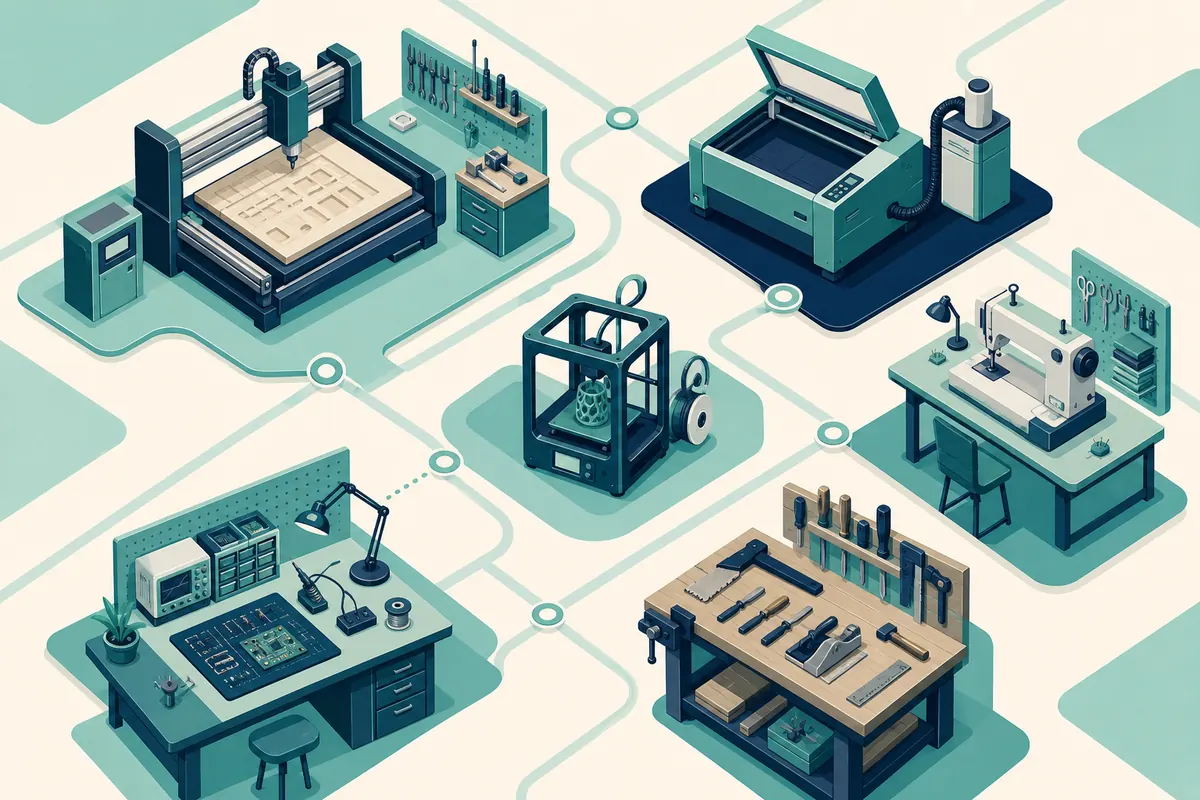
The retail teaching landscape
- Home centers — the big-box chains run free DIY workshops (tiling, faucets, power tool basics) and famously free kids' build clinics on weekend mornings. Zero commitment, zero cost, real hands-on time with tools you may not own.
- Woodworking specialty retailers — stores like Rockler and Woodcraft are the standouts of the category: paid classes ($50–$300) on real machines — turning, joinery, CNC, epoxy — taught by actual woodworkers, plus free weekend demos. Class sizes are small and the instruction quality routinely beats intro classes at membership shops.
- Craft and fabric stores — classes on sewing machines, sergers, and cutting machines, usually cheap and beginner-paced. A reasonable taste test before committing to a sewing lab or a machine purchase.
- Welding supply stores — some run intro demo days and short courses; worth a call if metal is your direction.
- Tool brand roadshows — manufacturers tour demo events through retailers. Free, hands-on, and unapologetically promotional.
The honest deal: education subsidized by retail
Understand why the class is cheap: the store profits when you buy the lathe. That's not a scam — it's a subsidy, and you can take the education without taking the upsell. The instruction is real (retail woodworking instructors are often retired pros who teach for the joy of it), the machines are current-generation and well-maintained, and nobody checks your receipt at the door. Just go in knowing that every technique will be demonstrated on gear from aisle five, and do your buying research independently afterward — The Maker Guide exists for exactly that step.
What retail classes can and can't give you
| Retail workshops deliver | They can't deliver |
|---|---|
| Cheap, low-commitment skill tastes | Open shop time — class ends, access ends |
| Trying a machine before buying it | Project work on your own schedule |
| Meeting local makers and instructors | The full shop ecosystem (dust collection, big iron) |
| Kids' first tool experiences, free | Progression past intermediate |
The “class ends, access ends” line is the one to internalize. A retail class answers “do I like this craft?” — cheaply and well. It cannot answer “where do I build my projects?” That's the job of a makerspace, a college program, or eventually your own garage. Treat retail workshops as the sampler course, and the class-versus-membership decision gets much easier, because you'll make it already knowing what you enjoy.
Getting the most from the sampler
Take the free demo before the paid class — it tells you whether the instructor teaches or sells. Ask instructors where they build; retail teachers know every makerspace, guild, and college program in the area and will tell you honestly. And bring a notebook: a two-hour turning demo from a 40-year woodworker contains more transferable judgment than most online courses, if you write it down.
Frequently asked questions
Are big-box store DIY workshops actually worth attending?
For beginners, yes — they're free, hands-on, and no one follows up with a sales call. The kids' weekend build clinics in particular are a genuinely great free first tool experience, aprons and pins included.
How good are Rockler and Woodcraft classes?
Consistently good — small groups, real machines, instructors who are working or retired woodworkers. At $50–$300 they cost less than most makerspace class series, with the caveat that you get no shop access afterward and techniques feature products from the sales floor.
Can I try a tool at a store before buying it?
That's half the point of retail demos — turning a pen on the store lathe or test-driving a track saw beats any spec sheet. Take the demo, then do your comparison research independently before spending; store instruction is honest, but store inventory is not neutral.
Do retail classes lead to shop access anywhere?
Not directly — retail stores sell classes, not memberships. But instructors moonlight everywhere in the local maker scene and are the single best source of 'where should I actually join?' intelligence. Ask at the end of class; you'll get real answers.