Guide
Accessibility in Makerspaces
Updated June 11, 2026
Making is for every body — but shop floors weren't always designed that way. Whether you're a maker with a disability, a parent of one, or a space trying to do better, here's what genuine accessibility looks like beyond the ramp at the door.
Physical access: the bench test, not the door test
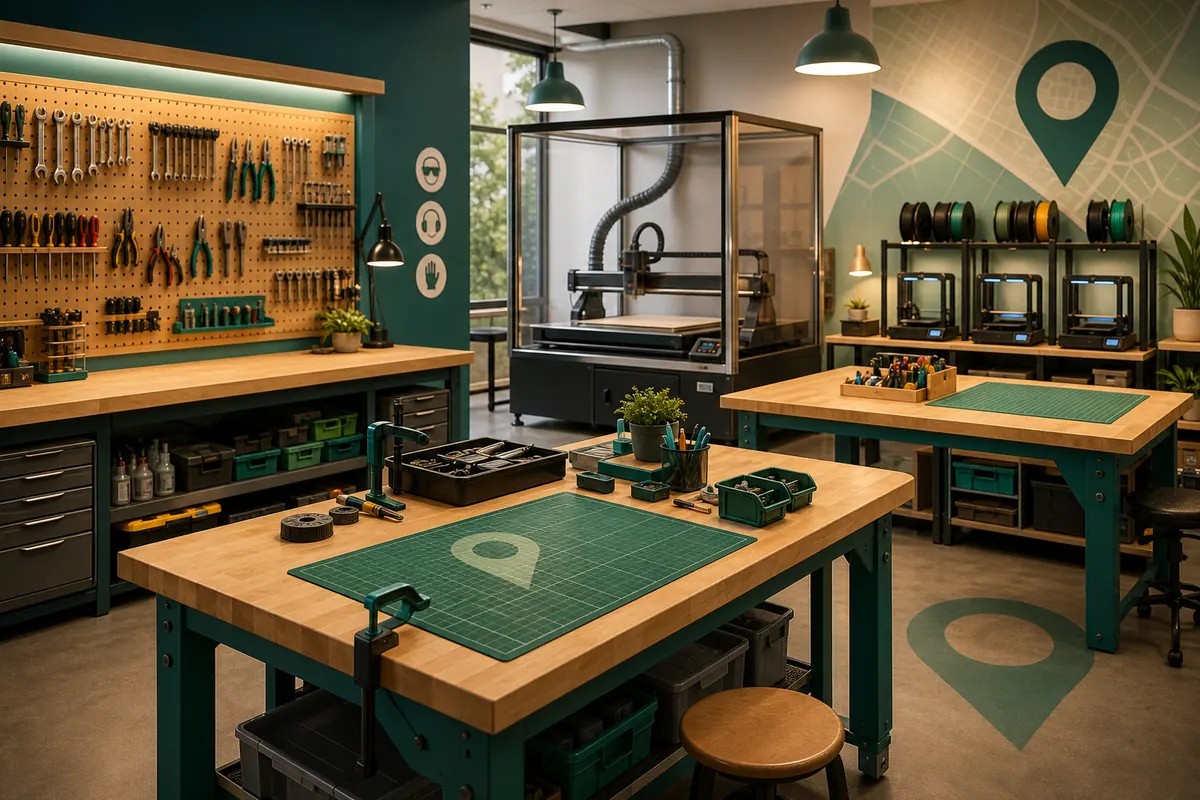
ADA-compliant entrances are common; usable shops are rarer. The questions that matter: Are aisles between machines wheelchair-wide with projects in progress, not just on the floor plan? Is at least one workbench height-adjustable or seated-height? Can machine controls (laser lids, E-stops, vise handles) be reached from seated position? Is there an accessible path to the one thing you came for — or does it end at the woodshop threshold? Ask for a video call walkthrough if visiting is costly; good spaces say yes.
Sensory access: the loudest room in town
Shops are sensory-intense: planers scream, fluorescents flicker, dust and solvent smells stack. What helps and exists today in good spaces: posted quiet hours (often weekday mornings), warning systems before someone fires up the dust collector, ear protection culture that normalizes wearing it always, and staff who'll tell you honestly which hours are calm. For makers with sensory processing differences, the right *time* at an average space often beats the perfect space at the wrong time.
Instructional access: how training is taught
Checkout classes default to spoken-lecture-plus-demo. Ask: Can training be done one-on-one? At a slower pace, or split across sessions? Are written/video versions of the material available? Can a support person attend free? Spaces answer these requests well far more often than their websites advertise it — instructional flexibility is the most commonly available, least publicized accommodation in the maker world.
Adaptive technique is deep maker knowledge
Disabled makers have been engineering adaptations forever: jigs that replace two-handed operations, foot switches, magnified work lights, seated welding setups, one-handed clamping systems. If you need a technique, search for it by task ('one-handed routing jig') — and know that building the adaptation is itself the kind of project shop communities love helping with. A space's willingness to mount your foot switch tells you everything about whether it deserves your dues.
Questions to ask any space
- “Can I tour the actual work areas, not just the lobby?” — then apply the tour checklist through your own access lens
- “Can checkout training be adapted — pace, format, one-on-one?”
- “Do support people/aides need their own membership?” (The good answer is no.)
- “What are your quietest regular hours?”
- “Has another member with [your situation] worked here — can I talk to them?”
For spaces reading this
The cheap upgrades come first: one adjustable-height bench, posted quiet hours, written versions of checkout materials, a free-support-person policy, and an accessibility statement on the website that names a contact person. None costs more than a mid-range table saw blade budget, and together they open the door to members who'll be your most loyal. Organizations doing maker education — OCreate and similar creative learning programs — design for mixed abilities from the start and are worth studying.
Frequently asked questions
Are makerspaces required to be ADA accessible?
Public accommodations generally must meet ADA requirements, but compliance varies with building age and the nonprofit/private status of the space — and 'compliant' covers entrances and bathrooms, not bench heights or training formats. Ask about the specific access you need rather than relying on the label.
Can I bring a helper or aide to a makerspace?
Most spaces allow support people, and the better ones don't charge for them — but policies vary, so confirm before joining. For machine work, your aide may need to sit the same safety orientation, which is reasonable.
I'm neurodivergent and shops overwhelm me. Any advice?
Ask for the quietest regular hours (staff know exactly when), tour at that time, and consider noise-cancelling protection that doubles as required ear safety. Many members run this exact strategy; you'd be in good company.
What's the most accessible way to start making?
Library maker labs — physically accessible public buildings, patient staff, seated equipment, free. Prove out the interest there, then evaluate makerspaces with your specific access needs as line-one questions. See library maker labs.